On Nov. 2, Bostonians at the polls will have the chance to make history.
Out of the country’s 100 largest cities, there are only six Asian American mayors, according to the Asian Pacific American Institute for Congressional Studies. In a city like Boston, which boasts a bustling Chinatown and a rich Asian American community, mayoral candidate Michelle Wu is a long overdue beacon of change.
The daughter of Taiwanese immigrants, Wu is set to break Boston’s 91-year streak of exclusively Italian or Irish American male mayors. If her lead in The Boston Globe’s latest voter poll over her opponent City Councilor Annissa Essaibi George holds through Election Day, she will be the first Asian American, woman and woman of color elected into the mayor’s office of Boston.
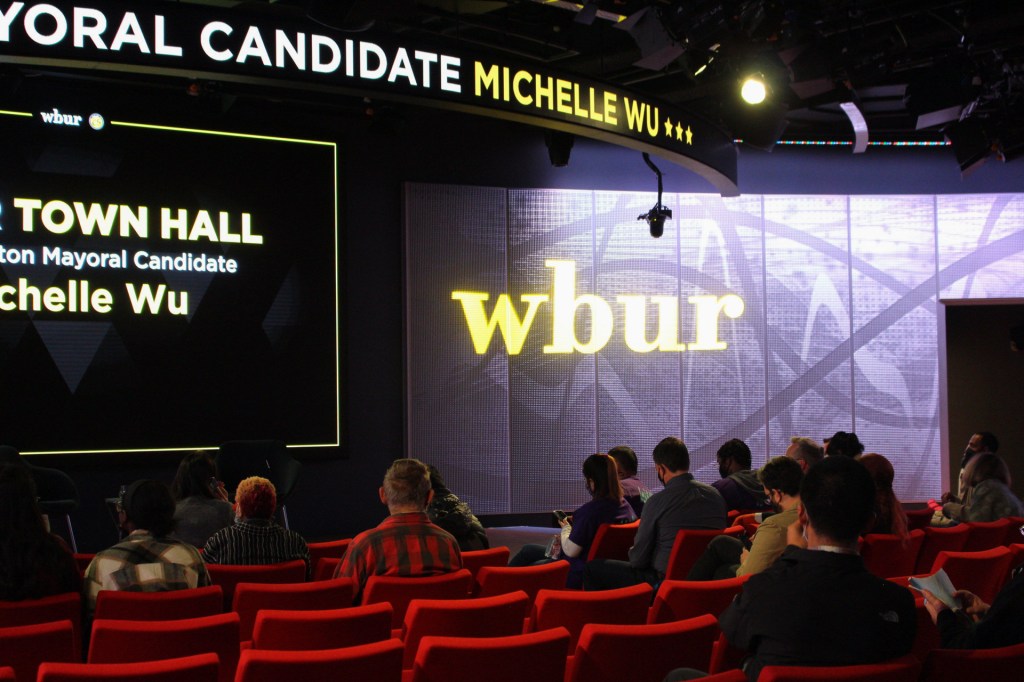
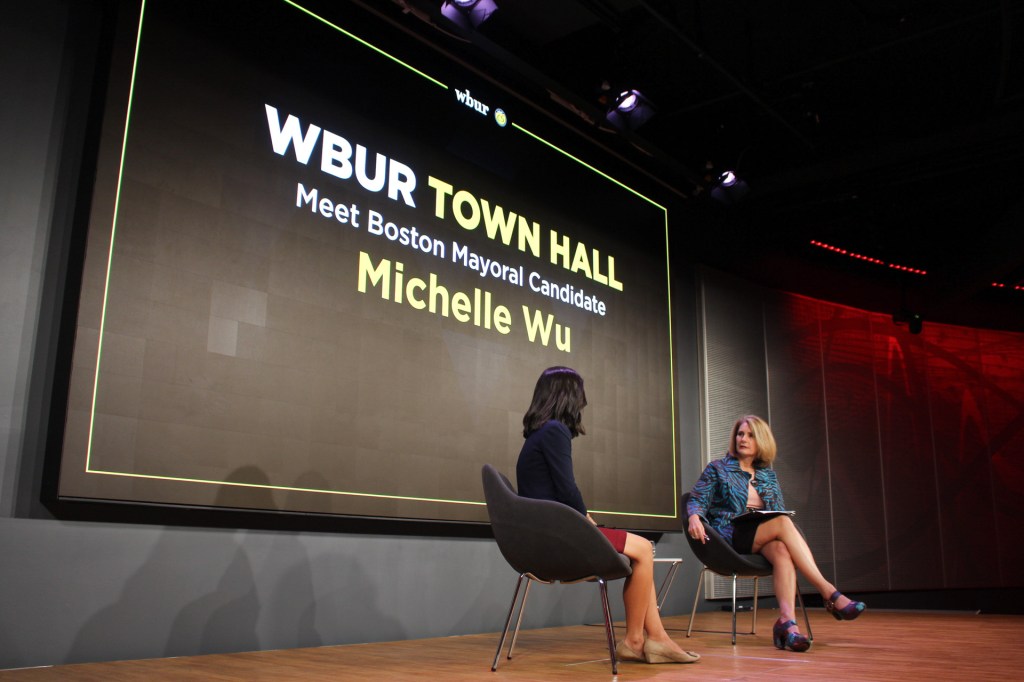
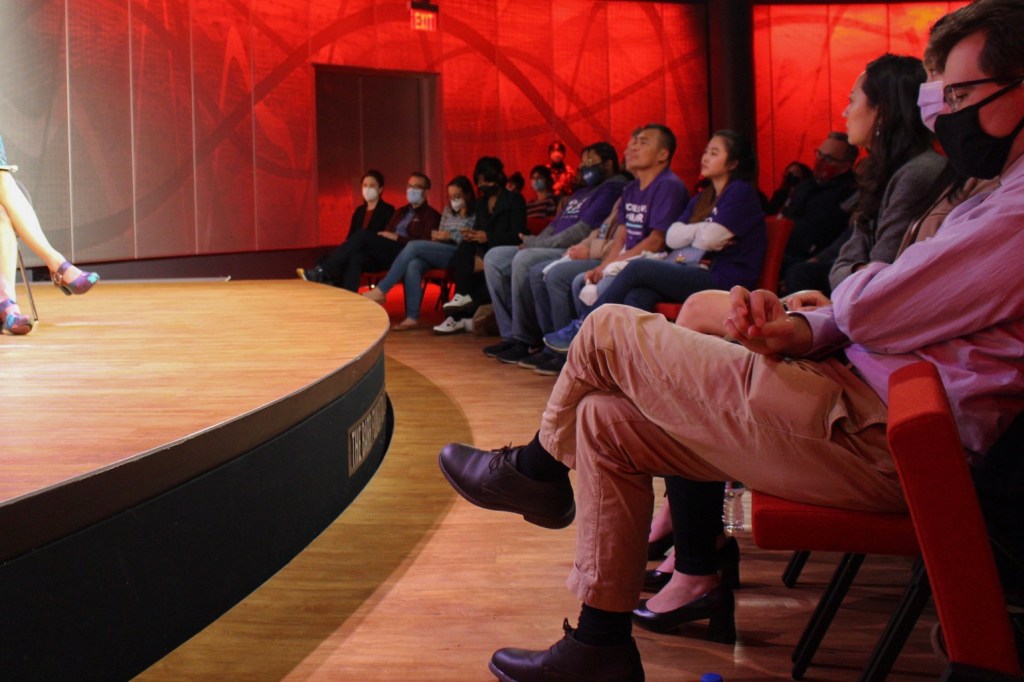
“Meet Mayoral Candidate Michelle Wu,” read the lit-up banner that spanned the width of the WBUR CitySpace on Monday evening of Oct. 18, just weeks before the climactic Election Day. Bostonians still in the day’s business casual, students sporting beaten backpacks and supporters clad in matching purple T-shirts trickled into the auditorium for a town hall with Wu.
Gathered among a small crowd of motley constituents, Wu cast aside the conventional model of the banal town hall. Instead, the history-making candidate introduced herself and her story by exploring the identities that have made her candidacy one of novelty.
“It’s been a learning curve to lean into moving away from the discomfort about talking about myself as an Asian American woman,” Wu began.
When she first stepped into the public eye, Wu struggled with revealing the intimate portraits of her background that guided her into civic service.
“In the culture and family that I grew up in, you’re supposed to leave the business of the family at home, right, not discussed publicly,” she explained, referencing the difficulty she encountered in navigating the principles of filial piety and “hen guāi,” the common praise for Chinese women who are obedient, pleasant and quiet.
Now at the tail end of a historic mayoral race, she articulated a firm resolve for sharing her authentic, lived experiences and for taking pride in the ways that her culture and identity have shaped her journey.
“Leaning into my identity as an Asian American woman and taking on these fights that we’ve had and the progressive issues that we’ve been able to make a great deal of change on has been, in some ways, embracing the fact that the culture I grew up in is about serving community,” she said. “And sometimes the best way to serve community is to ensure that you are expanding the definition of leadership, to being okay with the discomfort.”

Hrithika Ravuri, a recent Boston University graduate of South Asian descent, nodded along to Wu’s manifesto for future Asian American leaders. Ravuri was still unpacking from her move to Allston when she made her way to the town hall that evening, and the new Bostonian saw Wu’s evolution from city councilor to a potential mayor as a good omen for an era of progress and diversity in the city.
“We were all here together two years ago for the Boston City Council debate, and Michelle Wu was part of that,” said Ravuri, gesturing to her friends as they posed with Wu for a photo. “I feel like young politicians are representing a lot of our ideas. We get to see more change coming in.”
Kaitlyn Chang, a Northeastern University student of East Asian descent, tuned into the town hall broadcast online. She recalled returning to Boston’s Chinatown in September and seeing banners in almost every storefront with campaign slogans in both English and Chinese.
“I did a double take when I heard her speak Chinese during the meeting,” said Chang. “It’s both comforting and outstanding that a fluent speaker is running for office. There’s never been a space for Asian leaders and culture in politics. There’s certainly never been a politician who’ll speak Chinese at an official event.”
As far as polling stations are concerned, Wu is set to mark several firsts for Boston. But for young Asian Americans in the city like Ravuri and Chang, Wu has already set forth a new definition of leadership.

 KARISSA KORMAN